Are you wondering if it is possible to live in Brussels without speaking French? To work in Belgium without knowing Dutch and French? Yes it’s possible. Some expats live in Brussels for years without using any language other than English. The expat community in Brussels is so large that it is quite possible to limit your social life to an English-speaking bubble! So what are the advantages of learning French and / or Dutch when you live in Brussels?
Open doors professionally
Even if many international companies and institutions in Brussels operate primarily in English, speaking French or Dutch gives you a serious professional edge. Local companies, Belgian public institutions, and even many teams within the European institutions often require at least one of the national languages for day-to-day work. Beyond the practical requirements, learning French or Dutch sends a powerful signal to employers: it shows that you are committed to putting down roots, not just passing through. In a competitive job market, that level of engagement can make all the difference when two candidates are equally qualified on paper. It also opens up a much wider pool of opportunities — countless Belgian companies, NGOs, law firms, and public sector organisations simply do not recruit in English only.

Connect with the real Brussels
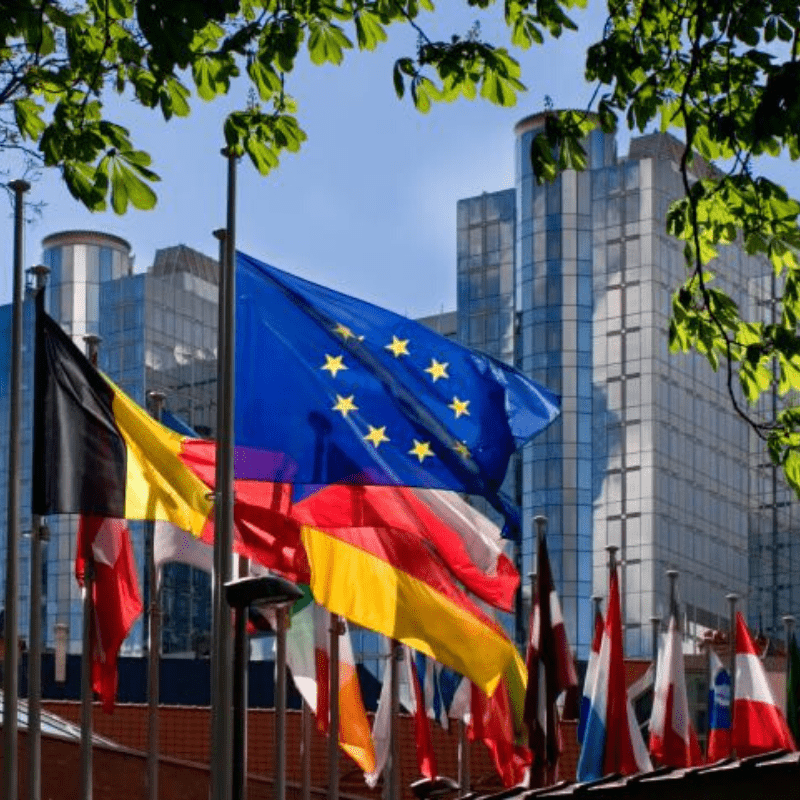
Brussels is probably one of the most cosmopolitan cities in Europe. In 2016, the newspaper Le Soir counted more than 104 languages spoken in the capital of Europe. With such a diverse and international population, it is easy to get by in English and tempting to stay within a comfortable expat bubble. But that would mean missing out on the authentic fabric of the city — its neighbourhoods, its locals, its culture. It would be a shame to live abroad without trying to immerse yourself in the local way of life and discover the quirks of this very particular little country! Without learning at least one of the national languages, how will you truly step out of your expat bubble, connect with Belgians, and get a real sense of what makes ‘Belgian-ness’ so unique?
Practical everyday life becomes so much easier
Knowing French or Dutch will simply make your daily life so much easier. In shops, at the town hall, at the gym — most everyday interactions happen in one of the local languages. And when it comes to administrative matters, let’s just say that Belgium has a certain reputation for paperwork, and navigating it in English alone can quickly become a headache! Understanding your doctor, chatting with your landlord, or following a conversation at your child’s school — these small moments add up more than you might expect. The frustration of relying on others for basic situations fades quickly once you have even a foundational level of French or Dutch.